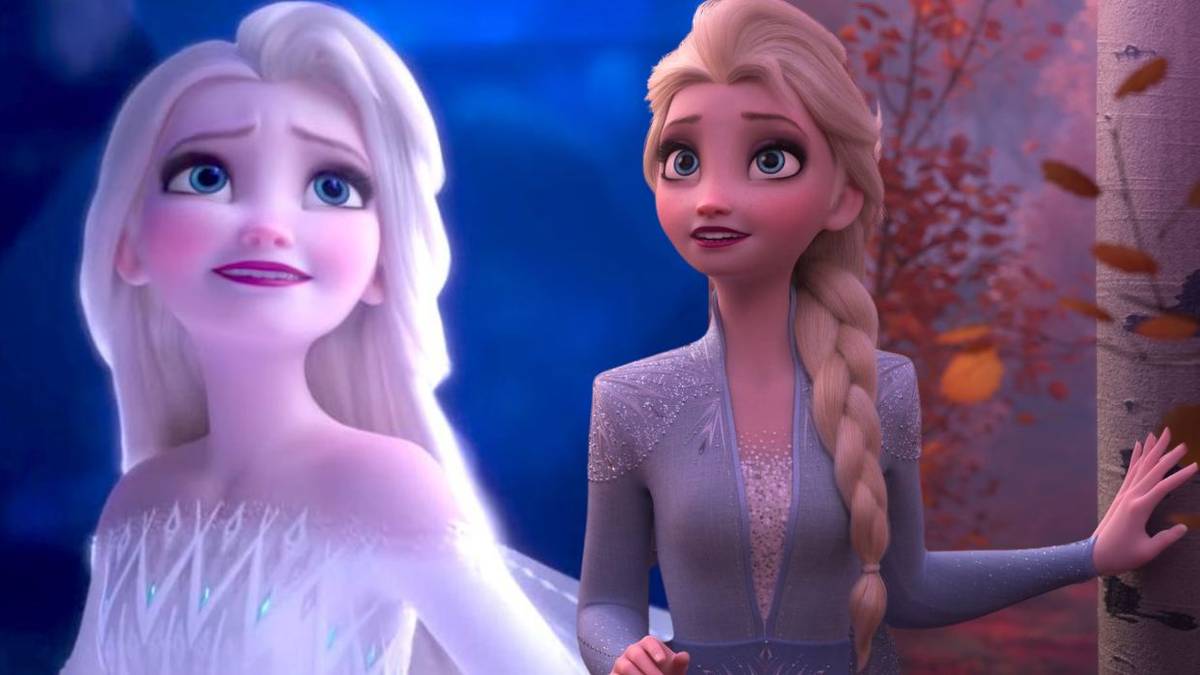
The release of Disney's Frozen 2 ignited a flurry of discussions among fans, with one chilling question standing out: did Elsa die in Frozen 2? The film's climactic moments, filled with intense peril and profound transformations, led many viewers to believe that Arendelle's Snow Queen might have met a tragic end. However, a closer look at the narrative, symbolism, and distinct plot points reveals a more nuanced and ultimately empowering fate for Elsa.
Far from succumbing to death, Elsa undergoes a significant metamorphosis, shedding her former role as queen to embrace her true destiny as the Fifth Spirit, a guardian of the Enchanted Forest. While her journey involves moments of extreme danger and even a brief, frozen state, these events are pivotal to her evolution, not her demise.
The Moment of Doubt: Unpacking Elsa's Frozen State in Ahtohallan
The primary source of confusion surrounding the question, "did Elsa die in Frozen 2?", stems from her profound experience within the mystical river Ahtohallan. As Elsa delves deeper into this ancient, memory-filled river to uncover the truth about her past and the origins of her powers, she encounters overwhelming visions and faces incredible physical challenges. The intensity of these revelations, coupled with the sheer cold and magical energy, pushes her to her limits. In a visually stunning and emotionally charged sequence, Elsa becomes encased in ice – a moment that, for many, strongly suggested her death.
This icy encasement, however, is not a permanent end but a temporary state of preservation and profound enlightenment. Ahtohallan, as the source of all magic, reveals a truth so powerful that Elsa, in her human form, cannot fully withstand it without a brief cessation of activity. Being frozen solid might typically signify death, but for Elsa, the Fifth Spirit, it functions differently. It's less a sign of her life ending and more akin to a 'system reset' or a pause, allowing her to process the ultimate truth and fully awaken to her true potential. Her powers, rather than failing her, were working to protect and integrate this immense knowledge. This critical juncture in the story serves to heighten the stakes, making her eventual re-emergence and transformation all the more impactful. For more on the fan theories, you might find Frozen 2's Biggest Mystery: Why Fans Thought Elsa Died an insightful read.
A Crucial Distinction: Elsa's Freeze vs. Anna's Curse
To fully understand why Elsa did not die in Frozen 2, it's crucial to differentiate her frozen state from the one Anna experienced in the first Frozen film. Many viewers, remembering Anna's near-fatal freezing, naturally drew parallels, leading to the mistaken belief that Elsa faced the same doom. However, the nature and origin of their respective icy predicaments were fundamentally different.
Anna's Curse in Frozen 1: Internal and Fatal
In the original Frozen, Anna was struck by Elsa's uncontrolled magic directly in the heart. This was a curse, an internal freezing that spread from within, slowly turning her into an ice statue. The elders warned that a blast to the heart would be disastrous and irreversible. Anna's freezing was explicitly tied to her life force draining away, and without an act of true love to reverse the curse, she would have literally frozen to death. Her salvation came from her selfless act of true love, sacrificing herself for Elsa, which broke the curse and brought her back to life.
Elsa's Freeze in Frozen 2: External and Transformative
Conversely, Elsa's freezing in Frozen 2 was an external phenomenon. She was encased by the ice of Ahtohallan, not cursed from within. This distinction is vital: her body was preserved, not dying. As the Fifth Spirit, inherently tied to the magical elements, her connection to ice is different from an ordinary person's. Her temporary encasement can be seen as a spiritual cocoon, allowing her essence to fully embrace her new identity as the elemental guardian. Her release was contingent upon Anna's actions to destroy the dam, which brought balance to the Enchanted Forest and allowed the full flow of Ahtohallan's power to free Elsa, completing her transformation. It was a release, not a revival from death.
More Than a Queen: Elsa's Spiritual Transformation as the Fifth Spirit
The overarching narrative intention of Frozen 2 was never to kill off its beloved protagonist but to guide her on a journey of self-discovery leading to a profound transformation. Elsa's "death" in the traditional sense would contradict the film's core theme: embracing one's true self and purpose. Her evolution into the Fifth Spirit is the culmination of her entire arc, starting from her struggle to control her powers in the first film to finally understanding their origin and purpose.
As the Fifth Spirit, Elsa becomes the bridge between the magical world and humanity, the protector of the Enchanted Forest, and the balance-keeper of the elemental spirits. This new role necessitates her "leaving" Arendelle and her duties as queen. This departure is symbolic; it's the "death" of her old life and identity, making way for a grander, more intrinsic purpose. She doesn't die; she transcends. Her connection to the Northuldra, her ancestors, and the very essence of magic becomes absolute. This is beautifully depicted as she sheds her royal attire for a lighter, more ethereal outfit, signifying her complete embrace of her spiritual identity. For a deeper dive into this shift, explore Elsa's Frozen Moment in Frozen 2: Not Death, But a New Role.
Her decision to remain in the forest, living in harmony with the spirits, highlights a selfless act of choosing her destiny over her regal responsibilities, ensuring peace and balance for both worlds. This transformation emphasizes growth and empowerment, rather than loss.
The Bigger Picture: Narrative Intent and Symbolism
Disney films, especially those as pivotal as Frozen 2, often employ powerful narrative techniques to convey deeper meanings without resorting to definitive death for central characters, particularly in stories aimed at a younger audience. The moments of peril Elsa faces, including the near-death experiences in Ahtohallan from exhaustion and exposure before her freezing, are tropes used to heighten the stakes and underscore the magnitude of her journey.
The story cleverly uses these "sacrifice tropes" and "near-death peril" to make Elsa's ultimate triumph and transformation feel earned and impactful. Her temporary frozen state and her departure from Arendelle symbolize a shedding of the past, a spiritual rebirth into her true form. It's a powerful message about finding one's authentic path, even if it means stepping away from what is expected or comfortable.
Elsa's journey mirrors universal themes of self-discovery, accepting one's unique gifts, and the courage to follow a higher calling. By depicting her transformation rather than her death, the film offers a hopeful and empowering conclusion, showing that change, even when it feels like an ending, can lead to a more profound and fulfilling existence. It allows for a character to evolve past their initial perceived limitations and fully step into their power, leaving open avenues for continued influence and impact within their narrative universe.
Conclusion
So, did Elsa die in Frozen 2? The resounding answer is no. While the film masterfully creates moments of intense suspense and visual ambiguity that could lead to such a misconception, Elsa's journey is one of profound transformation, not demise. Her temporary frozen state in Ahtohallan was a critical step in her evolution from Queen of Arendelle to the powerful and essential Fifth Spirit. She didn't die; she transitioned, shedding the constraints of her former life to embrace her true destiny as a guardian of magic and nature. Her fate is one of empowerment, self-discovery, and accepting a higher purpose, ensuring her continued presence as a beloved and iconic character in the world of Frozen.